Showing posts with label peace process. Show all posts
Showing posts with label peace process. Show all posts
Monday, November 4, 2013


Sunday, October 20, 2013

Sunday, September 15, 2013

Wednesday, September 11, 2013

Monday, September 2, 2013
POXYMORON PEACE PROCESS without DUE PROCESS OCCUPIED IRELAND

Due process is the legal requirement that the state must respect all of the legal rights that are owed to a person. Due process balances the power of law of the land and protects the individual person from it. When a government harms a person without following the exact course of the law, this constitutes a due-process violation, which offends against the rule of law.
Due process has also been frequently interpreted as limiting laws and legal proceedings (see substantive due process), so that judges - instead of legislators - may define and guarantee fundamental fairness, justice, and liberty. This interpretation has proven controversial, and is analogous to the concepts of natural justice, and procedural justice used in various other jurisdictions. This interpretation of due process is sometimes expressed as a command that the government must not be unfair to the people or abuse them physically.
Due process is not used in contemporary English law, though two similar concepts are natural justice (which generally applies only to decisions of administrative agencies and some types of private bodies like trade unions) and the British constitutional concept of the rule of law as articulated by A. V. Dicey and others. However, neither concept lines up perfectly with the American theory of due process, which, as explained below, presently contains many implied rights not found in the ancient or modern concepts of due process in England.
Due process developed from clause 39 of the Magna Carta in England. When English and American law gradually diverged, due process was not upheld in England, but did become incorporated in the Constitution of the United States.
By jurisdiction
England
Magna Carta
In clause 39 of the Magna Carta, John of England promised as follows: "No free man shall be seized or imprisoned, or stripped of his rights or possessions, or outlawed or exiled, or deprived of his standing in any other way, nor will we proceed with force against him, or send others to do so, except by the lawful judgment of his equals or by the law of the land." Magna Carta itself immediately became part of the "law of the land", and Clause 61 of that charter authorized an elected body of twenty-five barons to determine by majority vote what redress the King must provide when the King offends "in any respect against any man." Thus, Magna Carta established the rule of law in England by not only requiring the monarchy to obey the law of the land, but also limiting how the monarchy could change the law of the land. It should be noted, however, that in the thirteenth century these provisions may have been referring only to the rights of landowners, and not to ordinary peasantry or villagers.
Shorter versions of Magna Carta were subsequently issued by British monarchs, and Clause 39 of Magna Carta was renumbered "29." The phrase due process of law first appeared in a statutory rendition of Magna Carta in A.D. 1354 during the reign of Edward III of England, as follows: "No man of what state or condition he be, shall be put out of his lands or tenements nor taken, nor disinherited, nor put to death, without he be brought to answer by due process of law."
In 1608, the English jurist Edward Coke wrote a treatise in which he discussed the meaning of Magna Carta. Coke explained that no man shall be deprived but by legem terrae, the law of the land, "that is, by the common law, statute law, or custom of England.... (that is, to speak it once and for all) by the due course, and process of law.."
Both the clause in Magna Carta and the later statute of 1354 were again explained in 1704 (during the reign of Queen Anne) by the Queen's Bench, in the case of Regina v. Paty. In that case, the House of Commons had deprived John Paty and certain other citizens of the right to vote in an election, and had committed them to Newgate Prison merely for the offense of pursuing a legal action in the courts. The Queen's Bench, in an opinion by Justice Powys,

Due process has also been frequently interpreted as limiting laws and legal proceedings (see substantive due process), so that judges - instead of legislators - may define and guarantee fundamental fairness, justice, and liberty. This interpretation has proven controversial, and is analogous to the concepts of natural justice, and procedural justice used in various other jurisdictions. This interpretation of due process is sometimes expressed as a command that the government must not be unfair to the people or abuse them physically.
Due process is not used in contemporary English law, though two similar concepts are natural justice (which generally applies only to decisions of administrative agencies and some types of private bodies like trade unions) and the British constitutional concept of the rule of law as articulated by A. V. Dicey and others. However, neither concept lines up perfectly with the American theory of due process, which, as explained below, presently contains many implied rights not found in the ancient or modern concepts of due process in England.
Due process developed from clause 39 of the Magna Carta in England. When English and American law gradually diverged, due process was not upheld in England, but did become incorporated in the Constitution of the United States.
By jurisdiction
England
Magna Carta
In clause 39 of the Magna Carta, John of England promised as follows: "No free man shall be seized or imprisoned, or stripped of his rights or possessions, or outlawed or exiled, or deprived of his standing in any other way, nor will we proceed with force against him, or send others to do so, except by the lawful judgment of his equals or by the law of the land." Magna Carta itself immediately became part of the "law of the land", and Clause 61 of that charter authorized an elected body of twenty-five barons to determine by majority vote what redress the King must provide when the King offends "in any respect against any man." Thus, Magna Carta established the rule of law in England by not only requiring the monarchy to obey the law of the land, but also limiting how the monarchy could change the law of the land. It should be noted, however, that in the thirteenth century these provisions may have been referring only to the rights of landowners, and not to ordinary peasantry or villagers.
Shorter versions of Magna Carta were subsequently issued by British monarchs, and Clause 39 of Magna Carta was renumbered "29." The phrase due process of law first appeared in a statutory rendition of Magna Carta in A.D. 1354 during the reign of Edward III of England, as follows: "No man of what state or condition he be, shall be put out of his lands or tenements nor taken, nor disinherited, nor put to death, without he be brought to answer by due process of law."
In 1608, the English jurist Edward Coke wrote a treatise in which he discussed the meaning of Magna Carta. Coke explained that no man shall be deprived but by legem terrae, the law of the land, "that is, by the common law, statute law, or custom of England.... (that is, to speak it once and for all) by the due course, and process of law.."
Both the clause in Magna Carta and the later statute of 1354 were again explained in 1704 (during the reign of Queen Anne) by the Queen's Bench, in the case of Regina v. Paty. In that case, the House of Commons had deprived John Paty and certain other citizens of the right to vote in an election, and had committed them to Newgate Prison merely for the offense of pursuing a legal action in the courts. The Queen's Bench, in an opinion by Justice Powys,
Tuesday, August 27, 2013

Friday, August 23, 2013
PERFIDIOUS ALBION Peace Process

Perfidious Albion
From Wikipedia, the free encyclopedia
Perfidious Albion is a pejorative phrase used within the context of international relations and diplomacy to refer to acts of duplicity, treachery and hence infidelity (with respect to promises made to or alliances formed with other nation states) by monarchs or governments of Britain (or England) in their pursuit of self-interest and the requirements of realpolitik.
Perfidious signifies one who does not keep his faith or word (from the Latin word "perfidia"), while Albion is derived from an ancient Greek name for Great Britain.
Contents [hide]
1 Origins and use
1.1 Examples of usage
2 Fascist Italy and colonial propaganda
3 Cultural references
4 See also
5 References
Origins and use[edit source | editbeta]
The use of the adjective "perfidious" to describe England has a long history; instances have been found as far back as the 13th century.[1] A very similar phrase was used in a sermon by 17th-century French bishop and theologian Jacques-Bénigne Bossuet:
'L'Angleterre, ah, la perfide Angleterre,
que le rempart de ses mers rendait inaccessible aux Romains,
la foi du Sauveur y est abordée.
(England, oh, treacherous England,
that the ramparts of her seas made inaccessible to the Romans,
there also the faith of Christ has landed.)
The coinage of the phrase in its current form, however, is conventionally attributed to Augustin, Marquis of Ximenez a Frenchman who wrote in a 1793 poem:
Attaquons dans ses eaux la perfide Albion.
(Let us attack perfidious Albion in her waters.)
In this context, Great Britain's perfidy was political: in the early days of the French Revolution many in Great Britain, the most liberal European state, had looked upon the Revolution with mild favour, but following the overthrow and execution of Louis XVI, Britain had allied herself with the other monarchies of Europe against the Revolution in France. This was seen by the revolutionaries in France as a "perfidious" betrayal.
"La perfide Albion" became a stock expression in France in the 19th century, to the extent that the Goncourt brothers could refer to it as "a well-known old saying". It was utilised by French journalists whenever there were tensions between France and Britain, for example during the competition for colonies in Africa, culminating in the Fashoda incident. The catch-phrase was further popularized by its use in La Famille Fenouillard, the first French comic strip, in which one of the characters fulminates against "Perfidious Albion, which burnt Joan of Arc on the rock of Saint Helena" (Carried away by his anti-English fury, the character mixes up Joan of Arc withNapoleon, who was exiled to the British island of Saint Helena).
Examples of usage[edit source | editbeta]
The term often refers to the English reneging on the Treaty of Limerick of 1691, which ended the war between the predominantly Roman Catholic Jacobite forces and the English forces loyal to William of Orange, giving favourable terms to the Irish Catholics, including the freedoms to worship, to own property and to carry arms, but those terms were soon repudiated by the Penal Laws of 1695.
In Portugal the term was widely used after the 1890 British Ultimatum, after Cecil Rhodes' opposition to the Pink Map.
In Irish political debate the term may be used in conjunction with the term 'Hibernia Immaculata' to suggest a simplistic view of Irish history in which Britain is the cause of all Irish misfortune.
The term was used by then Vice President of the United States Dick Cheney in response to the meeting in November 2008 betweenBritish Foreign Secretary David Miliband and Syrian President Bashar al-Assad.[2]
Fascist Italy and colonial propaganda[edit source | editbeta]
Further information: Propaganda of Fascist Italy and Nazi propaganda and the United Kingdom
 This section needs additional citations for verification. Please help improve this articleby adding citations to reliable sources. Unsourced material may be challenged and removed.(November 2012)
After the 19th century, relationships between France and Britain improved, since the growing power of Germany was a threat for both the countries. During World War I the two countries were allies in the struggle against German forces, leaving their historical rivalry behind. However, the term "perfidious Albion" would have been soon used again by fascist powers in order to criticise the global dominion of the British empire, that drains resources and occupies territories while leaving nothing to emerging powers such as Italy or Germany which had limited colonial empires.
Fascist propaganda depicted the British as ruthless colonialists who exploited foreign lands and peoples to feed extravagant lifestyle habits like eating "five meals a day". Benito Mussolini called the British Empire "Perfida Albione" after the Second Italo-Abyssinian War, because despite having carved out large colonial territories for herself, Britain approved of trade sanctions in the wake of Italian aggression against Ethiopia. In fascist propaganda, the sanctions were depicted as an attempt to deny Italy its "rightful" colonial dominions, whilst at the same time Britain was trying to extend its own influence and authority. Mussolini called "un posto al sole" (a place in the sun) the goal of the fascist expansionism, that is, an extended colonial and politic power in order to bring back the glory of the Roman empire in the Mediterranean sea and the influence of Italy in world politics.
During World War II the term Perfida Albione was again used many times by the Italian fascist regime for propaganda purposes. In Mussolini's propaganda, Western nations were winning only because they had superior industrial and economic resources, and the superior skills and valour of Italo-German soldiers were defeated only by overwhelming numbers of weapons and machinery brought by "vile", "untruthful" and "wretched" plutocratic powers – with the aid of a claimed "Zionist conspiracy" against fascist powers.
The term has been revived in light of declassified documents that show that Churchill was protecting British nationals who helped rearm Japan during the 1920s and 1930s: Lord Sempill[3] and Frederick Rutland.[4]
Cultural references[edit source | editbeta]
Today the term is used in many contexts, and largely divorced from its historic origins.
It is used in the Irish adaptation of the folk song Foggy Dew, about the Easter Rising of 1916, "Oh the night fell black and the rifles' crack Made perfidious Albion reel".
It was used by Argentinians in the context of the football rivalry between the Argentine and English national teams.
It is also often used in a humorous context, notably in France ("Perfide Albion"), Spain ("Pérfida Albión"), Italy ("Perfida Albione"),Portugal ("Pérfida Álbion") and Romania ("Perfidul Albion")
See also[edit source | editbeta]
Anti-British sentiment
Anglophobia
References[edit source | editbeta]
^ Schmidt, H. D. (1953). "The Idea and Slogan of ‘Perfidious Albion’". Journal of the History of Ideas 14 (4): 604–616. JSTOR 2707704.
^ Hersh, Seymour M. (March 2009), "Syria Calling", The New Yorker
^ Lashmar Paul; Mullins, Andrew (24 August 1998). "Churchill protected Scottish peer suspected of spying for Japan Second World War". The Independent. Retrieved 7 December 2012.
^ Getlen, Larry (27 May 2012). "The traitor of Pearl Harbor". New York Post. Retrieved 7 December 2012.

http://www.releasemartincorey.com
Monday, August 19, 2013

Thursday, August 15, 2013
IRISH PEACE PROCESS DEVOID ON DUE PROCESS

The reason SF and FF split in the first place was the Constitutional issue. PSF surrendered on that matter, so there are now no actual ideological differences.While Martin McGuinness has called De Valera a traitor, for murdering IRA men, he also said Ireland could not be freed without armed struggle. We now have proof that McGuinness is a waffler like Gerry Adams, who says he was never in the IRA and with FF and PSF having 40% of the vote its highly likely that Britain's MI5 will have a major say after the next election and that a United Ireland will rejoin the British Commonwealth. Michael Martin is correct but like Adams he fogets to mention, it is first and foremost devoid of Justice, as in the instance of internment without trial.
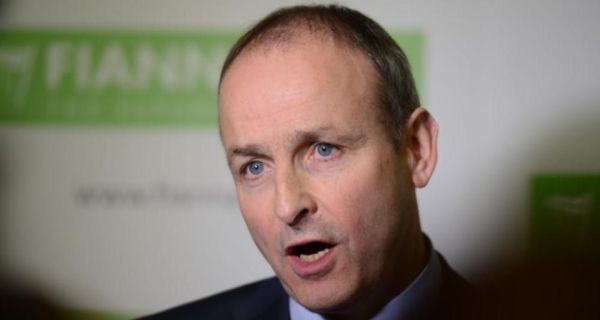
The Northern Ireland peace process is devoid of urgency and ambition and run by people who pander to their own constituencies and partisan concerns, Micheál Martin has said.
Opening the Merriman Summer School in Lisdoonvarna, Co Clare, last night, the Fianna Fáil leader said problems in Northern Ireland were being merely “managed” rather than “developed”.
“In some areas we are seeing a slow but undeniable retreat from a policy of deeper co-operation,” he said.
A majority in Northern Ireland felt the Stormont Assembly had achieved little, he said. In the Republic, people paid attention to Northern Ireland only when problems arose.
“There are only a handful of journalists who pay any attention to the wider cultural, social and economic dimensions of relations within Northern Ireland and between North and South,” he said.
“It is as if issues relating to the North have been put away in a file marked ‘history’ only to be dusted off when communal tensions flare up again.”
His address focused on the need for the opportunities provided by the Belfast Agreement to be pursued fully.
“The failure to take all of these opportunities, to build deep understanding of other communities, to aggressively target development, to work to being the concerns of marginalised groups and areas on to a shared agenda – each of these poses a long-term threat to what has been achieved,” he said.
The British-Irish element of the agreement was the most developed, he said, but North- South opportunities were being overlooked.Calling for a “reinvigorated north-south dimension”, he said work was needed to promote development which would show practical results for communities.
His singled out the failure to secure funding for the Narrow Water bridge spanning counties Louth and Down, and called for a range of all-Ireland economic initiatives including a Border Economic Zone.
UNITY: CLOSER THAN ANYONE THINKS
Moya St Leger argues that Irish citizens remain unprepared for unity. It is a slightly modified version of a piece featured in the Irish Democrat on 17 May 2007 Moya St Leger. Connolly Association president 2002-2008.
IRELAND COULD unite within ten years. All the indicators suggest as much. These include the steady demographic shift in the North; the assurance of Her Majesty's Government that Britain has "no selfish strategic or economic interest" in Northern Ireland; the pledge of both the Irish and British governments to support legislation to bring about a united Ireland if both parts of Ireland vote in favour of it, and the fact that political obstacles have been removed to this end.
Yet in the Irish Republic, at home, in the office, on the street, in bars and restaurants, in cabs and buses, not a word is said. Ninety years after the Easter rising - republicans excepted - a nation remains resolutely silent on the one historical imperative for which their forebears fought and died.
There is some talk of a united Ireland in the North but virtually none in the Republic. This has been noted by the Connolly Association. Since an end to partition is closer than it has ever been, in London we have been swapping our own theories on why so few in Ireland wish to comment.
In Dublin recently, a brilliant young film-maker was unequivocal in her view: "United Ireland? You can keep the north. We don't want those troublemakers," she said.
Understandable. Twenty-five years of bombing and shooting in the north caused people in the Republic to draw back in fright and distance themselves from their northern neighbours. Nationalism became associated with violence, so republicans were banned from radio and TV, and military parades at Easter abandoned.
Hostile media coverage of the IRA campaign mimicked the biased reporting in the British media. The representation of the IRA as a bunch of depraved criminals, whose thuggery bore no historical resemblance to the armed struggle of the 'old IRA', suited certain political elements in the Republic who were nervous of Sinn Fein's all-Ireland focus.
The unremitting anti-republicanism of the mainstream Irish media left no room for dispassionate political analysis and debate. The respectful stance of successive Irish governments vis-à-vis Britain persuaded the Irish that any talk of a united Ireland was tantamount to siding with terrorists.
People were led to believe there was a moral gulf between the 'old IRA' who fought in the war of independence and the Provos, as if a fundamentally different moral standard could be applied to the Soloheadbeg ambush of the RIC in 1919 and the mortar attack on the Newry RUC police station in 1979.
This schizophrenic attitude became the default mindset of the majority. It led to reluctance in the south to acknowledge the north as part of a country with shared ancient Irish roots present before the colonial period. A casualty of this disconnection is the younger generation, who grew up with no strong feelings about the border.
Another young Dubliner, an IT consultant, summed it up. "The north isn't our concern. Let the politicians get on with whatever they're doing, we've got better things to do with our time". He admitted to having little interest in Irish history. The tales of a handful of over-nineties reminiscing about the 1920s in country snugs never reached the ears of the Celtic Tiger generation hanging out in their trendy bars in the cities.
Now the Celtic Tiger is dead and the Irish of the Republic have seen their dreams shattered by having blindly nailed the Irish tricolour to the EU mast, Sinn Fein is increasing its TDs in the Dail, and Gerry Adams TD gaining influence in the Republic with his relentless unification campaign. Adams has clearly seen that relying on the Good Friday Agreement to produce constitutional change is not enough.
The under-forties in the Republic cannot empathize with the powerful emotions and zeal which fuelled the war of independence and the civil war. Never having experienced British hegemony, they see no point in challenging the status of the north, even less in discussing it.
Undeterred by the nation's waning interest, Albert Reynolds an astute businessman turned politician, who had never let the border impede his commercial activities, decided the conflict had to end.
By entering into talks with British Prime Minister John Major, the Taoiseach risked his political career in an effort "to overcome the legacy of history and to heal the divisions".
The seismic movement of the political ground triggered by the Reynolds-Major talks resulted in the Downing Street Declaration of 1993. Five years later, the multi-party Good Friday agreement received the consent of 94.39 per cent in the Republic.
Some Protestants in Northern Ireland's business community already locked into the global economy are wondering whether unification would be such a bad thing after all - provided they can keep their British passports!
The grindingly slow process agreed by the British and Irish governments of creating a stable Northern Ireland should not impede a nationwide debate in the whole of Ireland about the country's future. Adams is right to encourage that debate. He of all people knows the British will not discourage it because a national debate within the whole of Ireland accords with the unstated British long view that ultimately sovereignty of the north will have to be surrendered for chiefly economic reasons.
The state visit of the Queen to Ireland in 2011 was no courtesy visit. It signified the Crown's formal acknowledgement of the Irish Republic. One day a British monarch will be signing an Act of Parliament ceding the six remaining northern counties to the Republic. The royal visit of 2011 laid the necessary foundation for that Act of Parliament.
Preparing the ground for a united Ireland is laborious and takes time. The constitutional issues are relatively straightforward, but it is not premature for the Irish people north and south to start talking about the daunting practicalities of unification and, crucially, who will fund it.
Accommodating six extra counties will pose a huge challenge for the Republic's institutions and the British civil servants eventually tasked with cooperation in the process. Public discussion is needed in Ireland on how to tackle uniting the administration, the judiciary, education and local government.
The merging of health care facilities and transport infrastructure, not to mention the replacement of sterling with the Euro (if it still exists) and all that entails, require meticulous forward planning. A national debate requires the input of ideas from professionals in all fields. Germany is still working on overcoming the epic obstacles of its unification 24 years later. It is an ongoing process.
A divided Ireland has not been written in stone and acting as if devolution is the end of the road, while being a diplomatic stance to adopt vis-a-vis. unionists, will not stem the inexorable tide of history.
IRELAND COULD unite within ten years. All the indicators suggest as much. These include the steady demographic shift in the North; the assurance of Her Majesty's Government that Britain has "no selfish strategic or economic interest" in Northern Ireland; the pledge of both the Irish and British governments to support legislation to bring about a united Ireland if both parts of Ireland vote in favour of it, and the fact that political obstacles have been removed to this end.
Yet in the Irish Republic, at home, in the office, on the street, in bars and restaurants, in cabs and buses, not a word is said. Ninety years after the Easter rising - republicans excepted - a nation remains resolutely silent on the one historical imperative for which their forebears fought and died.
There is some talk of a united Ireland in the North but virtually none in the Republic. This has been noted by the Connolly Association. Since an end to partition is closer than it has ever been, in London we have been swapping our own theories on why so few in Ireland wish to comment.
In Dublin recently, a brilliant young film-maker was unequivocal in her view: "United Ireland? You can keep the north. We don't want those troublemakers," she said.
Understandable. Twenty-five years of bombing and shooting in the north caused people in the Republic to draw back in fright and distance themselves from their northern neighbours. Nationalism became associated with violence, so republicans were banned from radio and TV, and military parades at Easter abandoned.
Hostile media coverage of the IRA campaign mimicked the biased reporting in the British media. The representation of the IRA as a bunch of depraved criminals, whose thuggery bore no historical resemblance to the armed struggle of the 'old IRA', suited certain political elements in the Republic who were nervous of Sinn Fein's all-Ireland focus.
The unremitting anti-republicanism of the mainstream Irish media left no room for dispassionate political analysis and debate. The respectful stance of successive Irish governments vis-à-vis Britain persuaded the Irish that any talk of a united Ireland was tantamount to siding with terrorists.
People were led to believe there was a moral gulf between the 'old IRA' who fought in the war of independence and the Provos, as if a fundamentally different moral standard could be applied to the Soloheadbeg ambush of the RIC in 1919 and the mortar attack on the Newry RUC police station in 1979.
This schizophrenic attitude became the default mindset of the majority. It led to reluctance in the south to acknowledge the north as part of a country with shared ancient Irish roots present before the colonial period. A casualty of this disconnection is the younger generation, who grew up with no strong feelings about the border.
Another young Dubliner, an IT consultant, summed it up. "The north isn't our concern. Let the politicians get on with whatever they're doing, we've got better things to do with our time". He admitted to having little interest in Irish history. The tales of a handful of over-nineties reminiscing about the 1920s in country snugs never reached the ears of the Celtic Tiger generation hanging out in their trendy bars in the cities.
Now the Celtic Tiger is dead and the Irish of the Republic have seen their dreams shattered by having blindly nailed the Irish tricolour to the EU mast, Sinn Fein is increasing its TDs in the Dail, and Gerry Adams TD gaining influence in the Republic with his relentless unification campaign. Adams has clearly seen that relying on the Good Friday Agreement to produce constitutional change is not enough.
The under-forties in the Republic cannot empathize with the powerful emotions and zeal which fuelled the war of independence and the civil war. Never having experienced British hegemony, they see no point in challenging the status of the north, even less in discussing it.
Undeterred by the nation's waning interest, Albert Reynolds an astute businessman turned politician, who had never let the border impede his commercial activities, decided the conflict had to end.
By entering into talks with British Prime Minister John Major, the Taoiseach risked his political career in an effort "to overcome the legacy of history and to heal the divisions".
The seismic movement of the political ground triggered by the Reynolds-Major talks resulted in the Downing Street Declaration of 1993. Five years later, the multi-party Good Friday agreement received the consent of 94.39 per cent in the Republic.
Some Protestants in Northern Ireland's business community already locked into the global economy are wondering whether unification would be such a bad thing after all - provided they can keep their British passports!
The grindingly slow process agreed by the British and Irish governments of creating a stable Northern Ireland should not impede a nationwide debate in the whole of Ireland about the country's future. Adams is right to encourage that debate. He of all people knows the British will not discourage it because a national debate within the whole of Ireland accords with the unstated British long view that ultimately sovereignty of the north will have to be surrendered for chiefly economic reasons.
The state visit of the Queen to Ireland in 2011 was no courtesy visit. It signified the Crown's formal acknowledgement of the Irish Republic. One day a British monarch will be signing an Act of Parliament ceding the six remaining northern counties to the Republic. The royal visit of 2011 laid the necessary foundation for that Act of Parliament.
Preparing the ground for a united Ireland is laborious and takes time. The constitutional issues are relatively straightforward, but it is not premature for the Irish people north and south to start talking about the daunting practicalities of unification and, crucially, who will fund it.
Accommodating six extra counties will pose a huge challenge for the Republic's institutions and the British civil servants eventually tasked with cooperation in the process. Public discussion is needed in Ireland on how to tackle uniting the administration, the judiciary, education and local government.
The merging of health care facilities and transport infrastructure, not to mention the replacement of sterling with the Euro (if it still exists) and all that entails, require meticulous forward planning. A national debate requires the input of ideas from professionals in all fields. Germany is still working on overcoming the epic obstacles of its unification 24 years later. It is an ongoing process.
A divided Ireland has not been written in stone and acting as if devolution is the end of the road, while being a diplomatic stance to adopt vis-a-vis. unionists, will not stem the inexorable tide of history.
Friday, July 19, 2013

Thursday, July 18, 2013
INTERNMENT PEACE PROCESS IS AN UNCONDITIONAL SURRENDER
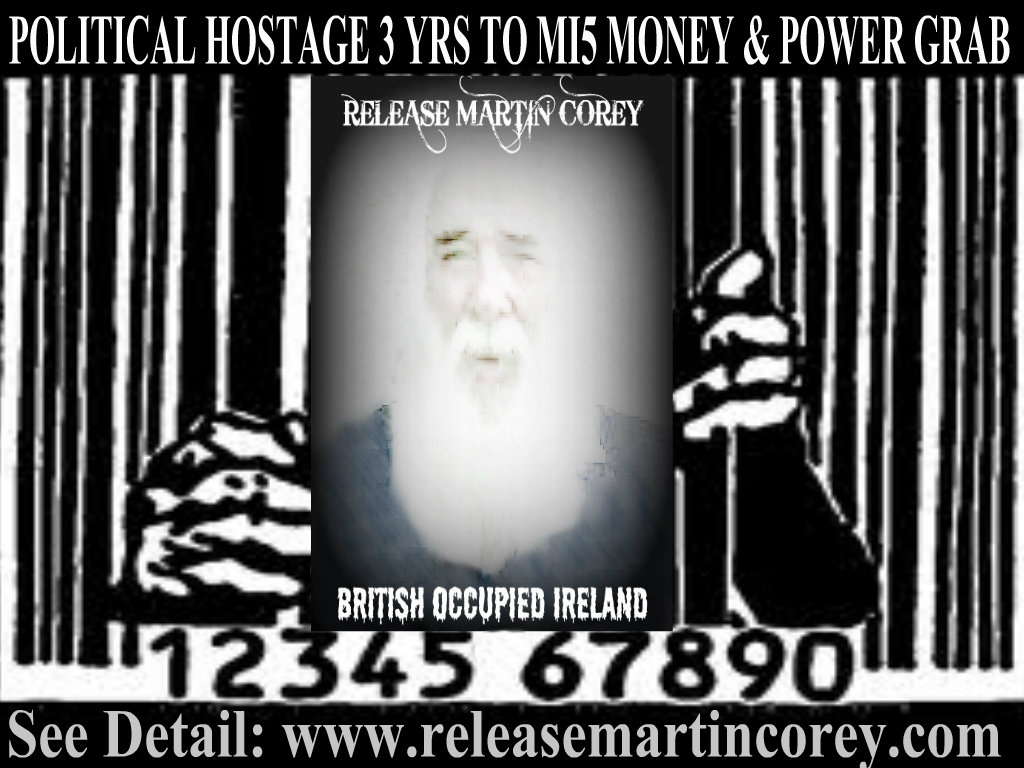
Two co-ordinated gun attacks on 4 January 1976 in British Occupied Ireland, shot dead two unarmed members of the Reavey family and three members of the O'Dowd family, with another two wounded, one of them died a month later. These murders were part of a string of sectarian attacks on Catholics and Irish nationalists by an alliance of British soldiers and British police officers. Billy McCaughey from the police Special Patrol Group, admitted taking part and accused another British police officer, of being involved.
His colleague, John Weir, said two British police officers and a British soldier were involved The O'Dowd and Reavey murders, in what became known as the murder triangle, were a major factor, in young men and women like 19 year old Martin Corey from nearby Lurgan, joining the IRA, to defend their communities from British State terrorism.
British Sinn Féin's elected MLA, John O’Dowd from the same O'Dowd family, almost 30 years later called on the British Government, to release Lurgan man Martin Corey. Mr Corey who had already served almost twenty years, was arrested again, at his Lurgan home on Friday April 16th 2010, and brought to Maghaberry prison, on the instruction of the British Secretary of State, without any charges being brought against him.
Mr Corey has now remained politically interned more than three years, without charge.or any reasons given, related to his political internment without trial. He therefore cannot defend himself, while the British State and its secret services, have bombed and shot, the only two local lawyers, Rosemary Nelson from Lurgan and Pat Finucane an expert on European Law, that might have been able to help Martin in the absence of any ethical, political oversight. The British secret services have also assassinated the local journalist Martin O'Hagan in Lurgan, who would have intimate local knowledge of the individuals involved, who would highlight this grave injustice.
MLA Mr O’Dowd has said:
“The detention of any citizen without charge is totally unacceptable. If evidence exists of wrong doing against anyone then the proper course of action is to present that evidence in a court of law.
“A Court hearing allows a defendant to challenge the evidence in an open court and for due process to decide the fete of the defendant, not the British Secretary of State.
“No charges have been brought against Mr Corey and he has now spent 7 months in detention on the word of the British Secetary of sate. His continued detention is totally unacceptable and I am calling for his immediate release."
Now that statement almost three years ago, despite the promises of power sharing in a supposed Peace Process, despite British Sinn Fein being firmly entrenched with the British establishment as part of thegoverning 'executive' in Stormont and Mr O’Dowd "unacceptable" declaration, along with other colleagues brief PR soundbites on the matter have not followed through by any obvious action required, as did the SDLP when internment without trial was last introduced in British Occupied Ireland, when they simply withdrew from Stormont in protest, deeming it totally unacceptable to any Nationalist never mind a professed republicans. Dead Irish republican volunteers would turn in their graves at such a spectacle. Meanwhile Adams and Co. couldn't be bothered explain the details of any agreement or couldn't be bothered other than issue a few grunts of PR Soundbites while climbing to power on the wounds of their dead volunteers and martyrs.
All of these matters related to the welfare and status of ex-combatants and volunteers, before the so called "Peace Process" were meant to be dealt with under what became known as the Weston Park agreement. However it now appears, there was no actual agreement on this matter at all, with the result that many ex-combatants and volunteers have been thrown to the British wolves and left without any protection.The British now politically intern and imprison with impunity at Her Majesty's pleasure. Right now members of British Sinn Fein, Republican Sinn Eein, Eirigi and RNU all perfectly legitimate political parties, are incarcerated indefinitely as political prisoners, prevented from pursuing their political objectives by peaceful means, hardly the fruits of an genuine Peace Process?
The leader of British Sinn Fein, has been taken to task on numerous occasions by many volunteers, including myself, about the terms and conditions of agreements, with regard to ex combatants.Gerry Adams and his colleagues have failed to clarify or be accountable to the people, who put his party in political power in the first instance. In the absence of accountability, we can only reasonably assume after the passage of so much time and the incarceration of so many former volunteers, that there is no actual agreement on this matter. This is criminally irresponsible by any standards of leadership.
Now one of the first responsibilities of any leader, in the event of the cessation of hostilities, are to acquire assurances and promises with regard to the welfare of his community and his soldiers(volunteers). Undertakings of protection for example of children and women from rape and his soldiers from revenge or vindictive treatment. To cease activity without such undertakings or promises is called an unconditional surrender and betrayal of both community and volunteers. The rape of republican children and women continues along with the vindictive treatment of senior republicans like John Downey and Martin Corey to name but a few. Whatever John O'Dowd or British Sinn Fein mean by "unacceptable", in the instance of genuine Irish Republicans that translates into action, hopefully peaceful
Wikipedia, defines "Unconditional surrender as a surrender without conditions, in which no guarantees are given to the surrendering party. In modern times unconditional surrenders most often include guarantees provided by international law. Announcing that only unconditional surrender is acceptable puts psychological pressure on a weaker adversary. Perhaps the most notable unconditional surrender was by the Axis powers in World War II."
The most famous early use of the phrase occurred during the 1862 Battle of Fort Donelson in the American Civil War. Brigadier GeneralUlysses S. Grant of the Union Army received a request for terms from the fort's commanding officer, Confederate Brigadier GeneralSimon Bolivar Buckner. Grant's reply was that "no terms except an unconditional and immediate surrender can be accepted. I propose to move immediately upon your works." When news of Grant's victory—one of the Union's first in the Civil War—was received inWashington, D.C., newspapers remarked (and President Abraham Lincoln endorsed) that Ulysses S. Grant's first two initials, "U.S.," stood for "Unconditional Surrender," which would later become his nickname.
However, subsequent surrenders to Grant were not unconditional. When Robert E. Lee surrendered his Army of Northern Virginia atAppomattox Court House in 1865, Grant agreed to allow the men under Lee's command to go home under parole and to keep sidearms and private horses. Generous terms were also offered to John C. Pemberton at Vicksburg and (by Grant's subordinate, William Tecumseh Sherman) to Joseph E. Johnston in North Carolina.
Grant was not the first and only officer in the Civil War to use such a term. The first instance came when Brigadier General Lloyd Tilghman asked for terms of surrender during the Battle of Fort Henry. Flag Officer Andrew H. Foote replied, "no sir, your surrender will be unconditional". Even at Fort Donelson, when a Confederate messenger first approached Brig. Gen. Charles F. Smith, Grant's subordinate, for terms of surrender, Smith stated "I'll have no terms with Rebels with guns in their hands, my terms are unconditional and immediate surrender". The messenger was passed along to Grant but there is no evidence that either Foote or Smith influenced Grant's decision later on that day. In 1863 Ambrose Burnside forced an unconditional surrender of the Cumberland Gap and 2,300 Confederate soldiers[3] and in 1864 General Gordon Granger forced an unconditional surrender of Fort Morgan.
The use of the term was revived during World War II at the Casablanca conference when American President Franklin D. Rooseveltsprang it on the other Allies and the press as the objective of the war against the Axis Powers of Germany, Italy, and Japan.[4] And, when President Roosevelt suddenly announced this surrender condition at Casablanca, he did so referencing U.S.Grant and the fact that the famous general's initials, since the Civil War, had also come to stand for "Unconditional Surrender". (In doing so, however, FDRhad erroneously referred to Grant as "Ulysses Simpson Grant", which actually was the name of the general's grandson, who had served during both World Wars.)[5]
The term was also used at the end of World War II when Japan surrendered to the Allies. Both Winston Churchill and Joseph Stalindisapproved of the demand for unconditional surrender, as did most senior U.S. officials). It has been estimated that it helped prolong the war in Europe through its usefulness to German domestic propaganda that used it to encourage further resistance against the Allied armies, and its suppressive effect on the German resistance movement since even after a coup against Adolf Hitler."
The current brutal British treatment of political prisoners such as British and Republican Sinn Fein's members John Downey and Martin Corey to name but a few senior republicans, are the fruits of an unconditional surrender by Gerry Adams and McGuinness. As the Good Books says by their fruits you will know them, thus this shameful secret unconditional surrender, was sold to the volunteers, the Irish republican Movement and Irish people as a Peace Process. Part of the attributes of honesty, is calling things by their right name. Adams and McGuinness on the basis of information released to the public are guilty at best of incompetence. I say this in the interest of Irish Republican Unity.
As a volunteer prior to the H-Block Hunger Strike, I was informed that an IRA cessation of activity was already agreed, in return for a political platform. However what we were not told, was that this was a hyped British political platform, exclusive to individuals like Adams and McGuinness, to the detriment of Republican ethics of principles before personalities. I and many others for the sake of some "bloody peace" against our better judgement, were willing to give the process a chance.
I personally believe, that political republican violence at this point in time will not help the "Cause of Ireland and its people of no property." However it is critically important that clarification, honesty and justice drive the process, not obfuscations, political internment and injustice if it is to have any substance or longevity unlike the Sticks and their numerous predecessors of generational internment and counter insurgency, since the foundation of the two scum states.
I have no choice, as a former volunteer and former chairperson of what has now evolved into British Sinn Fein but to reluctantly, accuse both Gerry Adams and Martin McGuinness of sociopathic, irresponsible, unaccountable, leadership of what has now become definitively in every sense British Sinn Fein. I do not use the words British Sinn Fein, which are a contradiction in themselves lightly. This is not a personal attack, on the individuals concerned who have considerable political charisma and I also know from personal experience there are still some genuine but naive people in that party.
That is not however in the interests of the plain people of Ireland. It certainly is not in the interests of Martin Corey, an innocent 63 year old man, who has been interned without trial, for more than 3 years now, along with other political prisoners abandoned by British Sinn Fein's unconditional surrender. The sociopathic political, personality, that enables the rape and abuse of children, like British Sinn Fein, Fianna Fail, Fine Gael, Lackey Labour have no place in Irish politics anymore for they will enable the abuse of the Irish people as they have always done, to the bankers and the British, in the same way as the rape of their Irish babies.
Wednesday, May 29, 2013
COMMANDER GERRY ADAMS BLASTS BRITISH BREACHING PEACE PROCESS

Gerry Adams Accuses Perfidious Albion of Breaching Peace Process
Provisional Sinn Fein leader Gerry Adams is accusing the British Tory government of breaching commitments given during the Peace Process following the arrest of leading Donegal Provisional Sinn Fein member John Downey. The veteran republican was brought before Westminster Magistrates Court in London to face charges on a 1982 IRA bomb attack in London's Hyde Park in which four British soldiers were killed.
He appeared at the Old Bailey by video link from Belmarsh prison and was remanded in custody. No bail application was sought by Mr Downey, who has been a leading member of Sinn Fein in Donegal. In 2009, he read the Easter statement on behalf of the leadership at the Provisional annual Drumboe martyrs commemoration.
Mr Adams said an agreement made with the British government at the Weston Park talks about 'on the runs' Irish republicans still pursued with regard to outstanding prosecutions, had been breached by the British. He said the arrest of John Downey "is a matter of grave concern and a clear breach of commitments given by the British government at Weston Park and in subsequent negotiations".
The 2001 talks outside Birmingham were part of the implementation of the 1998 Good Friday Agreement. The Weston Park deal enabled the final disarming of the Provisional IRA. It also saw a British commitment to hold a public inquiry on the state assassination of lawyer Pat Finucane, which was equally reneged upon.
Provisional Sinn Féin Assembly member Gerry Kelly commenting on developments, described Mr Downey as "a long time supporter of the peace process". "The decision to arrest and charge him in relation to IRA activities in the early 1980s is vindictive, unnecessary and unhelpful. It will cause anger within the Republican community."
He further stated that following from the negotiated resolution of the OTRs issue, Mr Downey had received a letter from the British government in 2007, stating that he was not wanted by the PSNI or any other British police force. "Despite travelling to England on many occasions now six years on he finds himself before the courts on these historic charges," Mr Kelly said. This is similar to the shredding of a Royal pardon by the British, with regard to Marian Price.
"This development represents bad faith and a departure from what was previously agreed by both governments. "John Downey needs to be released and allowed to return home to his family." The controversial arrest followed the 15th anniversary of the 1998 Good Friday Agreement, when Mr Adams again urged the 26 County government to press the British on "outstanding issues" of the peace deal. Speaking in Belfast, he accused the Tory government of defaulting on a number of past agreements, including commitments to legislate for a bill of rights and an Irish language bill for the North.
He called on the Dublin government, which he said was "a co-equal guarantor" of the Good Friday Agreement, to fulfill its obligations to intervene. "I am calling on them now to bring forward a strategy to ensure the British government deliver on the commitments and support the work of the executive," Mr Adams said.
Saturday, May 25, 2013
THE UK SS ORANGE PEACE PROCESS INCREMENT

MI6 & The Lying Game: Rosa Monckton and the Oxbridge spooks... I/Ops news-alliance.com
In December 2003, Daily Mail journalist Sue Reid, with whom we have worked in the past investigating the alleged ‘suicide’ of Dr David Kelly, quoted a source, who insisted on remaining anonymous, saying that Diana went to a leading London hospital to undergo a pregnancy scan, days before she joined Dodi on holiday. The result is unknown and the test was conducted in the utmost secrecy. But then Diana’s self-confessed ‘best friend’ Rosa Monckton, claims that Diana menstruated only a week before the crash, while they were on holiday in Greece.
It is clear that Monckton believes she cannot be challenged on this issue but former MI6 officer Richard Tomlinson alleges that Rosa’s husband, Dominic Lawson, former editor of the Sunday Telegraph newspaper and Spectator magazine, provided journalistic cover for MI6 officers while he was editor of The Spectator. Rosa’s brother, the Honourable Anthony Leopold Colyer Monckton, a diplomat, was also an MI6 spy according to Tomlinson. It should be noted that Dominic Lawson has never sued any publication or person for alleging he was an MI6 stringer. Dominic Lawson, is of course, the son of former Tory Chancellor Nigel Lawson and brother of famous TV ‘kitchen goddess’ Nigella Lawson. The very same Nigel Lawson who detested Mohamed Al Fayed for besmirching his beloved Tories. Tomlinson alleges that Dominic Lawson provided cover for an agent named ironically ‘Spencer’, who was put on the case of a young Russian diplomat, Pluton Obukhov, in Tallin, capital city of Estonia.
In an excerpt from Tomlinson’s ‘banned’ book (The Big Breach) published in Pravda, it was revealed that Spencer, returning from a visit to Information Operations (I/Ops), which plants stories or propaganda in the British press, remarked, “Flippin’ outrageous. They’ve got the editor of the Spectator magazine on the books. He’s called ‘smallbrow’. He’s agreed to le me go to Tallin undercover as a freelancer for his magazine. The only condition is that I have to write an article which he’ll publish if he likes it’, the cheeky bastard wants a story courtesy of the taxpayer.”
The allegations that Dominic Lawson was a paid asset of MI6 have also been made in parliament but he has always denied ever having been an agent. How likely is it that he would admit it? Again, we reiterate that Lawson has brought no libel action against any publication alleging he was an MI6 asset, or a ‘stringer’ planted on newspapers by the spooks to further their covert propagandist agenda.
Other disturbing aspects of the unlikely ‘friendship’ between Diana and Rosa were raised by Paris-based journalist Jane Tawbase in a EuroBusiness investigation into Monckton and Lawson. She wrote: ‘Rosa Monckton, a generation older, made an odd friend for the often unhappy princess. A svelte sophisticate and a wealthy working woman, her first relationships and loyalties lay, almost from when she was born, with the Queen. She was a regular visitor to the royal household all her life and was, for that reason, more given to loyalty to the crown than to an unhappy and disruptive outsider, one who was seriously damaging the public image of the royal family.’
On closer inspection, the relationship between Monckton and the ‘disruptive’ Diana, is somewhat inexplicable, perhaps just very odd. Diana was a fashion goddess and fitness fanatic who delighted in shopping and modern music. Monckton, by contrast, is a highly cerebral woman of the world, married to a man with links to MI6 that no journalist or newspaper editor should ever have. Jane Tawbase also raises two further questions on this murky subject and throws more light on the matter than most before or after her. She wrote: ‘Whether Rosa Monckton introduced her brother to the princess and whether he was part of the MI6 operation. It was almost unthinkable that he was not.’ In her second point she wrote: ‘Did MI6 ask Rosa Monckton to do the key job of moving into the princess’s inner circle and become her confidante? It would certainly have made the job easier.’
Dissident MI6 officer, Richard Tomlinson, who has been harassed for years by the French and British authorities, is certain that Monckton’s brother is a spy. It should be noted that Anthony and Rosa’s grandfather worked for Edward VIII and kept a close watch on him for the security services throughout the abdication and beyond. Like Diana, the British Establishment were determined to rid themselves of Edward VIII. The Queen Mother, however, said that Diana was a greater threat to the House of Windsor than Wallis-Simpson and Edward VIII put together. Tawbase concludes that, ‘It would indeed be ironic if history had repeated itself and Rosa Monckton performed the same role for MI6 with regard to Princess Diana.’
In these circumstances, it is perhaps understandable that Rosa Monckton declared that Diana was not pregnant. It must also be noted that no one else can give witness to Monckton’s suggestion that Diana menstruated while they holidayed in Greece, nor should her statement be regarded as fact, it is opinion. Monckton simply expects everyone to believe her version of events because she was Diana’s ‘friend’. And again, it must be stated that Diana abhorred everything to do with the State and was convinced that hired assassins were trying to kill her. It is puzzling why Diana formed a friendship with Monckton. We must turn to the testimony of Richard Tomlinson, who has been deliberately ignored by the French authorities. His affidavit to judge Herve Stephan was dismissed. Stephan showed no interest in Tomlinson’s affidavit but the British certainly did and MI6 led a campaign of arrests and harassment against its dissident officer across the world to disrupt his life and attempt to silence him…. Tomlinson also revealed that during his time with MI6, he discovered that there was an informal but direct link between certain MI6 officers of senior rank and royal courtiers. St James’s Palace and Buckingham Palace are easy access points for the spooks through the back-channel process. Many of these ‘men’ share an Oxbridge background with royal courtiers and the relationship continues for life. They would all have known of the CIA eavesdropping operation against Diana and certainly shared the intel ‘product’.
In the Paget Report, Sir John Stevens alleges that MI6 and MI5 were not aware of the CIA operation. Indeed, he salaciously goes as far to say that the CIA were only interested in Diana’s ‘contacts’ and prime among which were Mohamed Al Fayed and his murdered son Dodi Fayed. By definition, if the CIA were watching Diana’s contacts, then Diana was also being watched. Obviously, Sir John Stevens, the faithful Establishment plod, knows this but at the same time, he must presume the general public to be completely stupid. His tale is defeated with elementary logic. British Intelligence certainly would have been told of the surveillance operation on Diana and her contacts and highly likely also, they would have been given access to the product of the eavesdropping. It is also perfectly clear to anyone with experience of modern surveillance that Diana would have been tracked through the signal from her mobile phone. Such signals allow the target to be pinpointed to within a metre of their location. The same is also true of Dodi Fayed, Wingfield, Rees-Jones and Henri Paul etc. As a ‘reward’ for his indiscretions, Tomlinson was arrested at gunpoint by the French DST (Direction de la Surveillance du Territoire) at his home. He suffered a broken rib in the operation against him despite the fact that he has no record of violence.
The DST agents were ordered to go in hard to teach him a lesson. The whole arrest was designed to shake him to the core and think better of opening his mouth in future. And this is an interesting point which requires further analysis. By their very nature, ‘fantasists’ or people who make things up, are ignored, not arrested at gunpoint and violently assaulted. Again, if Tomlinson was at least mistaken, or indeed lying about the matters he revealed, there would have been no need to arrest him and he could simply have been dismissed as a former employee with a furtive imagination. The fact he was arrested in such brutal fashion, proves conclusively that Tomlinson has revealed too many truths that powerful people would prefer to remain buried. It is also noteworthy that Tomlinson has not been accused of being a ‘conspiracy theorist’ by his detractors. In the event, Tomlinson was questioned for over eighteen hours at the Paris HQ of the DST to discourage him from giving evidence to the Stephan inquiry. But he did appear before Stephan and told him, “As long as they [MI6] can get away with doing something then that’s their only limit about what they will do. This includes assassination.” Diana’s decision to embrace Islam and highly likely produce a mixed-race brother or sister to the heirs to the throne of England, and her anti-landmines campaign were enough to warrant her elimination. But there is more still in the shape of the ‘secrets’ she held in her little box of treasures at Kensington Palace. Paul Burrell, often referred to as ‘Diana’s rock’ was aware of the box and most, if not all of its contents.
Following his arrest on the grounds that he unlawfully took over 300 items from Kensington Palace, after the princess’s funeral, he was interrogated again and again by Scotland Yard detectives, who shook him up quite badly but failed to break him. In his book A Royal Duty, he relates his experience of the arrest and what the political police were looking for: ‘Then DS Milburn asked me two bizarre questions: “Do you have a manuscript of the memoirs you are writing?” If there was one moment when I knew the officers were stabbing in the dark, that was it. No such manuscript existed.’ Burrell then explains the events of the following morning: ‘The next morning, DS Roger Milburn returned. On instructions from Andrew Shaw, I said nothing to his volley of questions. Again, his curiosity seemed to focus more on the contents of a box, sensitive paperwork and a manuscript.’ Burrell’s trial was a landmine for the monarchy and the Queen could not risk her former butler, revealing some of what he saw. In open court, just before the trial collapsed, a truly revealing encounter took place that gave the world some insight of what was in Diana’s box of treasures.
Burrell wrote: ‘The full picture emerged with the judge’s approval. Scotland Yard was looking for a signet ring given to the princess by Major James Hewitt; a resignation letter from her private secretary Patrick Jephson; letters from Prince Philip to the princess; and a tape, which became known after the trial as the Rape Tape. It was a recording made by the princess in 1996 when she informally interviewed former KP orderly and ex-Welsh Guardsman George Smith. He had alleged that after a night of heavy drinking he had been raped in 1989 by a male member of staff who worked for Prince Charles.
It all came to a head because George who had worked at Highgrove, St James’s Palace and KP, had been suffering nightmares, was drinking heavily, and his marriage was falling apart. He blamed it all on an incident that he said he was bottling up.’ ‘The princess knew the member of staff in question. From that moment on she loathed him. “I know what that evil bugger did. I know what he did to George, and I will never forgive him for that,” she seethed, after her futile attempts to bring about justice. He [George Smith] never returned to work, and accepted a settlement [Fiona Shackleton] at the end of his employment of around £40,000.’ ‘The princess ensured that the tape never saw the light of day. But the mystery of its whereabouts, and the threat its contents posed, emerged during the police investigation of my case. Lady Sarah McCorquodale had asked that Scotland Yard ‘ascertain’ the contents of the box.
In court, DS Milburn said: “I was looking for the contents of that box. All of a sudden, the undertones behind the raid on my home became clear.’ As the trial wore on it was obvious Burrell would have to take the stand. The prospect of ‘Diana’s rock’ hurling highly explosive stones at the British Establishment was enough to prompt the Queen to recall a conversation she had with Burrell in December 1997 at Buckingham Palace in which Burrell told her that he was taking a number of the princess’s items into safekeeping.
The exchange was a chilling encounter for Burrell. He wrote of it: ‘As the meeting neared its end, the Queen said one more thing to me. Looking over her half-rimmed spectacles, she said: “Be careful, Paul. No one has been as close to a member of my family as you have. There are ‘powers’ at work in this country about which we have no knowledge,’ and she fixed me with a stare where her eyes made clear the ‘do you understand?’. ‘She [Queen] might have been referring to the domestic intelligence service MI5 because, have no doubt, the Queen does not know of its secret work and ‘darker practices’ but she is aware of the power it is capable of wielding. Like the royal household, the intelligence services are given carte blanche to act in whatever way is considered to be in the best interests of state and monarchy.’
‘At my December 1997 meeting with the Queen and as my statement had made clear: ‘I feared at the time of the princess’s death that there was a conspiracy to change the course of history, and erase certain parts of her life from it. Mrs Frances Shand Kydd spent two weeks shredding personal correspondence and documents.’ Piers Morgan in his own memoir, The Insider, explains that he tried to help Burrell and have the quasi-case against him dropped, he wrote: - 17 January 2001 – I rang Mark Bolland at the Palace. ‘You guys are mad, Mark. Burrell could say anything in the stand.’ ‘I know, I know,’ he replied despondently. ‘It’s a mess.’ ‘Well, end it now, before it’s too late.’ ‘We can’t, the police are running the case now.’ A cornered Burrell could be a very dangerous beast. This will go on for weeks, and can only be damaging to the Royal Family. They must be mad allowing Burrell to potentially take the stand. Cornered and desperate, he might say anything, and he knows the lot because he was there. There’s also no way he stole Diana’s stuff, anyone who knows him knows that. He could make more money from what’s in his mind than he ever could from a few of her trinkets.
The Establishment were again courting disaster by trying to silence Burrell. In reality, the tactic worked in reverse, virtually ensuring that Burrell, facing five years in prison if convicted, would open up before the glaring eyes of the world to save his own skin. By 16 September 1997, bodyguard Trevor Rees-Jones had opened his eyes. The worry for the British Establishment was the strong possibility that he would remember what happened in the moments before the Mercedes crashed. Rees-Jones can certainly remember fastening his seatbelt just seconds before the car crashed but claims that he cannot remember anything after that. But again, damning further clarification comes in the shape of Piers Morgan and his memoir The Insider. Morgan wrote: ‘Tuesday, 16 September 1997 – I had a brief chat with Fayed today and he said that Rees-Jones is awake, and having flashbacks of the crash. ‘Can we have the first interview?’ Fayed was anxious. ‘He needs to tell us what happened first, that is the most important thing. Then perhaps he can talk to you. But we must be careful Piers, he is in a very bad way.’
To this day, Al Fayed has not told the world what Rees-Jones said to him! Naturally, Rees-Jones, who suffered terrible injuries, claims that he can remember nothing. Can he remember coming round in the hospital in the presence of Al Fayed and having ‘flashbacks of the crash’? We do not wish to be offensive to Rees-Jones, particularly given the injuries he suffered, but we do not think his story holds up in the slightest under examination. He can remember some things but not others, selective memory loss not amnesia. For instance, Rees-Jones can remember leaving the Ritz Hotel on the rue Cambon and that a white Fiat Uno was tailing them. He then recounts that he saw a white Fiat Uno again on the approach to the Alma Tunnel. He also recalls that he fastened his seatbelt and encouraged the others to do the same moments before impact. At the very moment he fastened his seatbelt, the white Fiat Uno was careering into the path of the Mercedes but Rees-Jones does not remember that.... His memory falls apart when it comes to events in the Alma Tunnel. He can remember belting up, not verbally at that time, but cannot remember seeing the white Fiat Uno in the tunnel nor a blinding white flash. If he can remember fastening his seatbelt, he can remember what happened in the very next seconds involving the white Fiat Uno and the blinding flash of light and the escaping motorbike. It is little wonder that the majority of people do not believe Rees-Jones. We will go further and state that he is lying about not being able to remember the juicy bits, the crucial events immediately before the Mercedes crashed. Either that, or he has made it all up about seeing a white Fiat Uno and fastening his seatbelt and encouraging the others to do the same. But then, why would he do that? This man wants his cake and to eat it but the majority of people do not swallow his 'sweetened' version of events. Rumours are rife in the media world that Rees-Jones has been threatened by British intelligence. If he opens his mouth and suddenly remembers what happened in the crucial seconds to impact, he might not be so lucky a second time. Rees-Jones is also still subject to the Official Secrets Act and government lawyers can make that mean whatever they want it to mean. Theoretically, the OSA should apply only to the period one was in service but the strictures of the Act apply for the rest of one’s life and Rees-Jones knows this only too well. There is also the fact that in Northern Ireland, Rees-Jones, a former paratrooper with experience of putting enemy targets under surveillance, worked closely at times with British Army Intelligence and he will know only too well what the Force Research Unit, MI6 and The Increment are capable of.
On his testimony that he cannot remember the vital seconds before I impact, Rees-Jones should not be believed. The claim is that he suffers from amnesia, only in part mind you, and that we should have sympathy for him. We genuinely sympathise with the fact that he suffered terrible injuries in the crash but one must remain logical and rational and not succumb to emotional impulses. In his book, The Bodyguard’s Story, he repeats the same old tale, over and over again: he cannot remember the ‘juicy bits’ but has no problem dishing out all the old crumbs of information he wants us to know. And we know people in the media world, who are certain that Rees-Jones has been silenced by British Intelligence.
An important note to end this article on comes in the form of a quote from former MI6 officer, Richard Tomlinson: “There is an arrogant faction in MI6, part of the Oxbridge clique, which doesn’t try to hide dedication to the royal family and their self-appointment as defenders of the realm.” And spooks excel at the lying game, as par for the course of their ‘training’ and ethics by prerequisite, are irrelevant.… http://www.news-alliance.com/mi6__the_lying_game.html
ARTICLE: The Unlawful Killing of Princess Diana and Dodi Al-Fayed
A call to arms to all anti-NWO activist: Resist royal cyber-bullying with all available means
TheRebel.org
Published 08th March 2013
Three days ago, the Rebel Site got taken offline by its hosting firm under the provisions of the Digital Millennium Copyright Act of 1998. The offense: I had republished the 2011 British documentary “Unlawful Killing” produced by Allied Star, a London-based film company owned by Egyptian billionaire Mohamed Al-Fayed, the father of Dodi Al-Fayed. The documentary implicates – amongst other things – the British royal family in the murder of the couple and its cover-up.
Youtube and Vimeo had already deleted the video a few weeks earlier, forcing me to host it directly on the Rebel Site. Two emails sent to me shortly after by the lawyers of my hosting firm unfortunately got intercepted by the spam filter. In those emails they advised me that they had received a complaint by a London based law firm, claiming the hosting of the video was in breach of their client’s copyrights. Since I didn’t receive the emails I obviously couldn’t comply with their request, forcing my hosting company of 7.5 years to disable the site.
Grudgingly, I deleted the video as demanded to get the site back online as soon as possible. However, I sent a letter back to the lawyers, with a 10 days deadline to provide written evidence that the plaintiff’s law firm was acting on behalf of the copyright owner, Allied Star. I also sent an email to Mohamed Al-Fayed, asking for permission to publish the film. The reply of his office was swift. It confirmed that they had requested the London law firm to make me take down the video. The only reason they gave was that the film had been taken off the market.
It becomes clear, when watching the documentary, that Dodi’s father deeply loved his son and was shattered by his death. Why would he spend millions to produce and promote a documentary on the suspicious circumstances surrounding his death and shortly later take it off the market without giving much reason? The only explanation that makes sense is that he has been put under enormous pressure to do so. Not only has he been bullied to take his film off the market, but the blackmailers made it his problem to prevent others from republishing it.
Personally, I don’t respond well to bullying. I hate bullies and fight them with all available means. Thankfully I’m not alone. In this case of cyber-bullying, resistance is not only civil duty, but easy. Be warned though! It would be illegal to locate a copy of the “Unlawful Killing” documentary via any BitTorrent site and distribute it to as many people as possible. It would be illegal to burn CDs and pass them to all your friends. It would be illegal to upload the video to video hosting sites under its own or slightly altered name. And it would be illegal to create a torrent of your own on BitTorrent sites and share it for other people to download. But it is not illegal, to publish this article, share, email and republish it on your blog, and that’s exactly what I’m asking all of my readers to do. Make it go viral.
READ FULL ARTICLE HERE
Categories: BANNED! in the UK - 'Unlawful Killing' Tags:
Diana Assassination 15 Years on – The Jack Blood Show – Wednesday 12th September 2012

DianaAssassination.com
September 12th 2012 Live Broadcast: Jack Blood (still stricken by the CC Flu) reports on the recent Mid east chaos aka, selection Psy Op.
Hour two: Joseph Skelton joins Jack to discuss his research on the Princess Diana Assassination (www.dianaassassination.com).
Listen to and/or download the show in full here.
Thanks to Jack for having us on his show.
Categories: Multimedia Tags:
FLASHBACK TO JULY 1997: Marriage of Charles poses risk to church

OUR COMMENTARY, 12th SEPT 2012: We are often tasked with the question of a motive as to why Diana was assassinated. In our research it is self-evident that there was not just one reason, but many factors to at least consider.
To the New World Order, Diana was a threat not only to the Military Industrial Complex that they control (see her successful campaign against the use of landmines at the time of her death). She was a threat in terms of undermining the Monarchy and beyond that, the establishment of the Church and State.
This is evidenced in the following article. It is indicative if not chilling to note that this was published only a few weeks prior to Diana’s death.
As we and others have documented elsewhere, this constitutional mess (i.e. well publicised love triangle of Charles, Camilla and Diana) as it was seen at the time was something that the British Intelligence Services (secret societies known in the public arena as MI5/6) needed to discontinue.
It is our contention that in June 1997, two months prior to Diana’s accident, an unsuccessful attempt was made on the life of Camilla within the borders of the UK. See our collection of information on this here. Following this failure, the contract was shifted over to target Diana by another arm of the same Intelligence Service network. This time it was carried out successfully outside the borders of the UK, in Paris.
To the shock of the British people, their icon, their legend was now gone and the same people that killed her, span a story publicly of ‘motor accident’. First blaming the paparazzi photographers, then landing the blame in the lap of the driver, Henri Paul.
To anyone with two brain cells to rub together this was no accident. Here we look at one of the several motives that is essential to understanding why she was killed. Due to Fair Use limitations we have not copied the full body article below, however the last two paragraphs are indeed worthy of note in this regard.
*************************************************
HEADLINE: Marriage of Charles poses risk to church
Article by Colin Brown
The Independent
Published 19th July 1997
********************
The Parliamentary aide to the Lord Chancellor yesterday said a constitutional crisis over the marriage of Charles and Camilla Parker Bowles would lead to the disestablishment of the Church.
The warning by Tony Wright, a Parliamentary private secretary to Lord Irvine, will be seen as part of the softening up exercise for the public to accept the eventual marriage between the Prince and his mistress, in spite of the denials by Downing Street and the Palace that it is contemplated.
The controversy over the marriage is likely to strengthen the opinion among some MPs that the Government’s constitutional reforms should include cutting the links between the Church and the state.
THE ARTICLE CONTINUES…
Last night’s party at Highgrove, thrown by the Prince to celebrate Mrs Parker Bowles’ 50th birthday, was part of the charm offensive to overcome public hostility stemming from his divorce from Princess Diana.
The Prince has been seeking advice from confidants on how best to introduce her to a wider public.
READ FULL ARTICLE HERE
Categories: Motives Tags:
FLASHBACK: Prince Philip pictured at Nazi funeral

Article by Andrew Levy
Daily Mail
Published 06th March 2006
*************************
Prince Philip has broken a 60-year public silence about his family’s links with the Nazis.
In a frank interview, he said they found Hitler’s attempts to restore Germany’s power and prestige ‘attractive’ and admitted they had ‘inhibitions about the Jews’.
The revelations come in a book about German royalty kowtowing to the Nazis, which features photographs never published in the UK.
They include one of Philip aged 16 at the 1937 funeral of his elder sister Cecile, flanked by relatives in SS and Brownshirt uniforms.
READ FULL ARTICLE HERE
Categories: Prince Philip Exposed Tags:
FLASHBACK: Di Told Me She Was in Danger
The Mirror
Published 2003-2004 (Exact date unknown)
************************************
DIANA confided in a royal biographer that she feared for her life just two months before her death.
Ingrid Seward was told by Diana that she felt her life had been in danger, in a heart-to-heart chat at Kensington Palace.
Ms Seward said: “We were having what she called a girlie chat and she just opened up. She told me exactly what she said in her letter to Burrell.
“She told me: ‘I know this sounds silly now, but I did really worry about the brakes on my car’.
“Diana said this to me at the end of June 1997. She was convinced there were people out to get her. We laughed about it. She didn’t tell me who they were. She was quite canny.
“She obviously took it quite seriously and said that she had the apartment swept for bugs.
“I spent the morning with her. Everything she told me was amazing. I was under trust not to repeat what she said.
“I couldn’t believe what she was saying. It was pretty extraordinary.”
Ms Seward, who wrote what Diana told her in an article 12 months ago, added: “Diana avoided saying who these people were who were after her.
“She was trying to emphasise the mistrust she felt for everybody and feeling completely isolated. It must have been pretty scary.
“I knew she was also fearful they would take the boys away from her, and was genuinely worried that would happen.
ORIGINAL LINK NO LONGER AVAILABLE
SEE FULL ARTICLE HERE
Categories: Just a Coincidence Tags:
FLASHBACK: Diana’s Fears: Philip Hates Me – He Wants Me To Disappear

Diana feared an attack on her life
Article by Padraic Flanagan
The Express
Published 09th June 2007
******************************
PRINCESS Diana was haunted by fears she would be murdered, and told friends of her concerns about Prince Philip’s animosity to her.
“He really hates me and would like to see me disappear,” she said.
The Princess, who died in a Paris car crash in 1997, repeatedly made clear her belief that she would be the victim of an Establishment conspiracy.
Her fashion designer friend Roberto Devorik explained that the Princess had spoken about how she would be killed in a fake accident.
“They will do it when I am in a small plane, in a car when I am driving, or in a helicopter,” she is said to have told Mr Devorik. He also revealed how Diana disliked having bodyguards because she felt they spied on her.
The article, in next month’s edition of US magazine Vanity Fair, reports how Diana voiced her suspicions on a trip to Rome with Argentinian Mr Devorik.
SEE FULL ARTICLE HERE
Categories: Just a Coincidence Tags:
FLASHBACK: Diana death probe: two computers stolen
IOL News
Published 07th February 2006
****************************
Two laptops have been stolen from offices used by a former police chief who is heading a probe into the death of Princess Diana in a Paris car crash in 1997, a newspaper said on Tuesday.
The theft sparked fears that the equipment may contain material from Operation Paget, the investigation headed by former Metropolitan Police Commissioner Lord John Stevens, the Daily Express said.
However, a spokesperson for the Metropolitan said the computers did not contain any sensitive information or any material linked to the probe.
SEE FULL ARTICLE HERE
Categories: Just a Coincidence Tags:
FLASHBACK: Diana was warned about ‘accident’

Yahoo News Online
Published 06th December 2005
*************************
Diana, Princess Of Wales was warned “accidents can happen” by a senior politician just six months before she died, according to her therapist.
Simone Simmons has told British police investigating Diana’s death in a 1997 Paris car crash that the princess asked her to listen to a recorded phone conversation with the politician threatening her over her campaign to ban landmines.
She was told, “Don’t meddle with things you don’t know about. Accidents can happen.”
Simmons has passed the name of the politician to police.
The allegations fuel claims Diana and her lover Dodi Fayed were murdered.
ORIGINAL LINK HERE
Categories: Just a Coincidence Tags:
FLASHBACK: Key Diana Evidence Will Stay Secret For 100 Years

Contact Music
Published 19th October 2005
***************************
Vital evidence relating to the tragic death of late British royal DIANA, PRINCESS OF WALES will remain secret for 100 years under French law.
London’s Metropolitan Police are conducting a new investigation into Diana’s death following a high speed car crash in Paris in 1997, but their attempts to learn the identities of 24 bodies who shared a mortuary with her dead chauffeur HENRI PAUL have been rejected.
According to British newspaper the Daily Express, investigating officers believe blood may have been taken from one of the other corpses in a bid by secret agents to frame Paul for drink driving.
MOHAMED AL FAYED, the father of Diana’s lover DODI who also died following the crash, is certain the French authorities refusal to divulge information about the 24 dead people is further evidence of a cover-up operation.
His spokesperson says, “We have struggled for years to establish the identity and cause of their deaths. This just reaffirms our belief that there is an orchestrated cover-up.
“Until anybody can prove otherwise, we believe that Diana was murdered.”
SEE FULL ARTICLE HERE
Categories: Just a Coincidence Tags:
FLASHBACK: Diana Embalming To Hide Pregnancy
OUR COMMENTARY: It matters not, the outcome of any tests as to whether she was pregnant. The more sensible argument/question is that she was assassinated at that time, because IT WAS BELIEVED that she was pregnant with Dodi’s child.
This is confirmed by several in the media and Royal circles to have been the case.
So it is contributing to a well known ‘straw-man’ argument to say: “…because some test says that she wasn’t pregnant, this proves that she wasn’t murdered for that reason”.
We need to be aware of this element.
**************************************************************

Contact Music
Published 26th September 2005
******************************
Late British royal DIANA, PRINCESS OF WALES was embalmed on the orders of British authorities to prevent tests which could have confirmed whether or not she was carrying her lover DODI FAYED’s child, according to a new investigation.
British newspaper the Daily Express today (26SEP05) claims a top official at the British embassy in Paris was informed just minutes after the Princess’s death that embalming her body would be illegal. But the procedure went ahead.
Professor PETER VANEZIZ, an independent pathologist says, “Nobody should be embalmed before a post-mortem. There is no reason why this should have been done in the case of the Princess.
“There was no reason for it to be done in order to repatriate her body to this country. That is evidenced by the fact Dodi Fayed’s body was not embalmed.
“One would have normally thought that the effect of embalming would destroy body samples if the person was pregnant.”
A spokeswoman for the UK foreign office says, “This is the subject of an ongoing inquiry by Lord Stevens and as such we have no further comment.
Fayed’s father MOHAMED AL FAYED has always insisted the tragic pair were murdered and claims he was knew Diana was pregnant.
He says, “I was told Diana was pregnant. Dodi told me the baby would have been my grandchild.”
SEE ORIGINAL ARTICLE HERE
Subscribe to:
Posts (Atom)
FriendFeed
My Blog List

THE WIND THAT SHAKES THE BARLEY IN IRELAND - SHARE

Facebook Badge

Facebook Badge

BOBBY SAND'S COMRADES TORTURED AGAIN OCCUPIED IRELAND

Fwicki

networkedblogs

AllVoices

Iraq Death Estimator

LinkWithin

Stop British Censorship of Irish Dissidents

BlogCatalog

LinkWithin
FriendFeed badge
Irishblogdirectory

STOP CENSORSHIP !
Subscribe Now: Feed Icon

irishblogs

Subscribe Now: Feed Icon
Ireland Headline Animator

Newstrust

Follow Blog
IrelandYouTube Headline Animator

Subscribe Now: Feed Icon
TweetIt

My Blog List
-
Links for 2017-02-22 [del.icio.us] - - Sponsored: 64% off Code Black Drone with HD Camera Our #1 Best-Selling Drone--Meet the Dark Night of the Sky!9 years ago
-
-
Irish Blog: MUSIC FOR PENSIVE VVANKERS - Irish Blog: MUSIC FOR PENSIVE VVANKERS: 'via Blog this' [image: StumbleUpon] My StumbleUpon Page
 11 years ago
 -
Irish Blog: MUSIC FOR PENSIVE VVANKERS - Irish Blog: MUSIC FOR PENSIVE VVANKERS: 'via Blog this'
 11 years ago
 -
Irish Blog: MUSIC FOR PENSIVE VVANKERS - Irish Blog: MUSIC FOR PENSIVE VVANKERS: 'via Blog this'
 11 years ago
 -
-
BOYCOTT BRITISH GOODS ReTweet See Link for Details http://bit... on Twitpic - BOYCOTT BRITISH GOODS ReTweet See Link for Details http://bit... on Twitpic: 'via Blog this'13 years ago
-
RT BOYCOTT BRITISH BRUTISH HUMAN RIGHTS CRIMINALS http://bit... on Twitpic - RT BOYCOTT BRITISH BRUTISH HUMAN RIGHTS CRIMINALS http://bit... on Twitpic: 'via Blog this'13 years ago
-
BBC BRITISH BUGGER CHILDREN World Service http://irishblog-irelandblog.blogspot.com/ rt #BBC - BBC BRITISH BUGGER CHILDREN World Service http://irishblog-irelandblog.blogspot.com/ rt #BBC: BBC BRITISH BUGGER CHILDREN World Service http://irishblog-...
 13 years ago
 -
WOMEN DYING IN BRITISH CONCENTRATION CAMPS - CARE2SHARE ! htt... on Twitpic - WOMEN DYING IN BRITISH CONCENTRATION CAMPS - CARE2SHARE ! htt... on Twitpic Peaceful protesters worldwide are now met with police wearing body armour, ...
 14 years ago
 -
-
INDYMEDIA IRELAND DRIBBLES FROM BOTH SIDES OF ITS MUBARAK MOUTH - Irish Blog: INDYMEDIA IRELAND DRIBBLES FROM BOTH SIDES OF ITS MUBARAK MOUTH15 years ago
-
-
-


